
Insights & Updates

Blog thumbnail

Packers Sanitation Services Inc. : When the Warning Signs Were There All Along

April 9, 2026
5 mins read
Forced labor is often assumed to be a problem of distant supply chains. The case of Packers Sanitation Services Inc. (PSSI) dismantles that assumption entirely.

Forced labor is often assumed to be a problem of distant supply chains. The case of Packers Sanitation Services Inc. (PSSI) dismantles that assumption entirely.

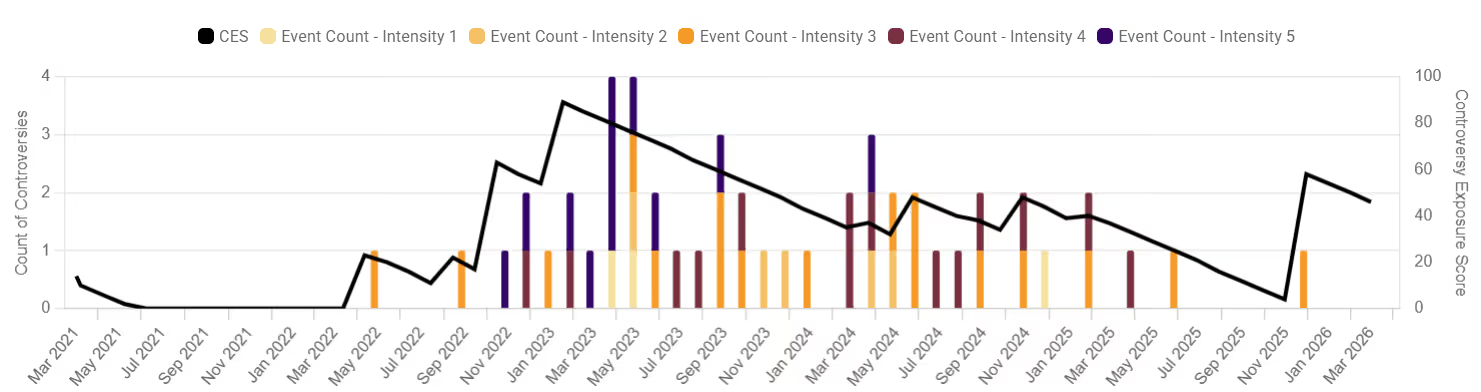
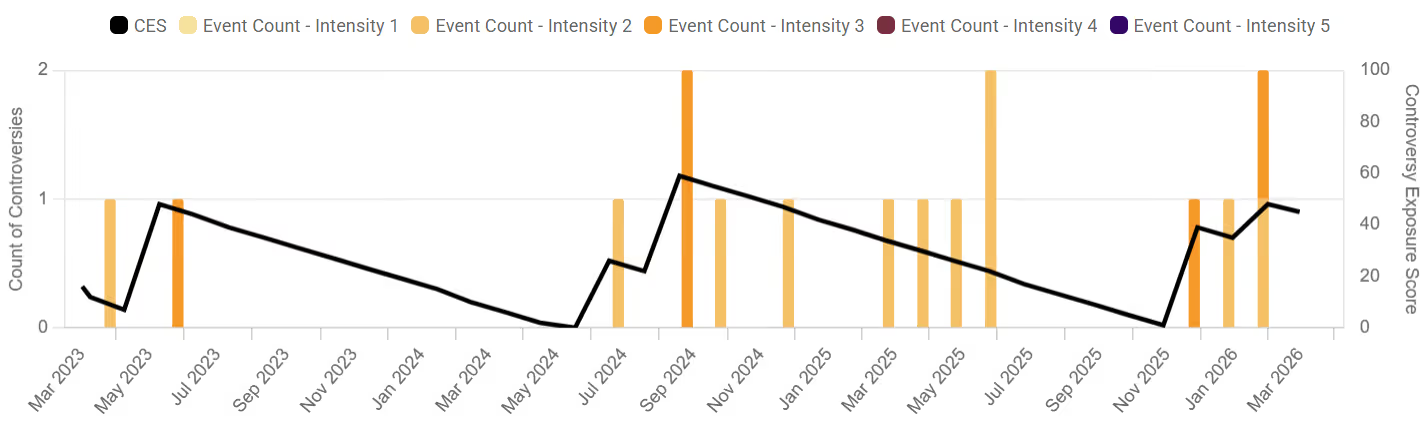
PSSI was a leading U.S. industrial cleaning contractor, servicing major meatpacking plants and backed by a top-tier private equity firm. Yet between 2022 and 2024, it became the center of one of the most significant child labor scandals in the U.S., one that had been quietly signaling its risks for years. SESAMm's controversy monitoring platform captured those early signals long before regulators intervened.

The Scandal

In November 2022, the U.S. Department of Labor discovered that PSSI had employed minors as young as 13 in hazardous overnight roles across 13 locations in 8 states. A federal investigation confirmed 102 children had been illegally employed, many handling dangerous chemicals and machinery. Three years earlier, in 2019, PSSI had already been sued for wage violations. The signal was there. It went unheeded.

The Fallout

The consequences were swift. A $1.5 million DOL fine. Contract terminations by Cargill and JBS. A DHS trafficking investigation. A replaced CEO. By late 2024, PSSI had shut its corporate office entirely. Even the private equity owner, Blackstone, faced direct scrutiny from pension funds, a reminder that labor violations travel up the ownership chain.

The Lesson

Every warning sign in this case was publicly visible before the crisis broke out. Wage lawsuits, labor complaints, and media coverage are all available in the public domain. Real-time controversy monitoring can surface these signals early, giving companies and investors the chance to act before exposure becomes unavoidable.

Forced labor is not only a humanitarian crisis. It is a material risk that demands better data, earlier detection, and stronger accountability.

Download the full case study infographic to see the complete timeline of events and key takeaways

Read More

Controversial business involvement screening is moving beyond its origins as a compliance exercise.

Under frameworks like SFDR and the EU Taxonomy, investors must prove that their portfolios not only promote sustainability but also exclude activities fundamentally at odds with environmental, social, or ethical principles. This marks a shift from static disclosure toward dynamic accountability, and it has broadened both the scope and ambition of ESG screening.

Historically, exclusions focused on a narrow range of activities - weapons, tobacco, or fossil fuels - and primarily applied to public equities. Today, that universe has expanded dramatically. Private markets, secondaries portfolios, and private credit exposures are now expected to undergo the same scrutiny as listed assets. This reflects not only regulatory alignment but also diversifying investor expectations, as institutions incorporate reputational, cultural, and mission-based constraints into their investment frameworks.

Modern exclusion policies increasingly include areas not yet covered by regulation but relevant to ethics, faith, or social impact. Examples range from pork-related activities in Sharia-compliant portfolios to emerging debates over cryptocurrency mining and trading, and even biotechnology topics such as human cloning or genetic manipulation that raise profound ethical questions. These additions illustrate how business involvement screening is evolving from a rule-based checklist into a reflection of each investor’s worldview and stakeholder commitments.

This evolution, however, brings complexity. Private assets and novel sectors often lack standardized data or public disclosures. ESG, compliance, and deal teams must process incomplete information, document decisions, and adapt quickly to new mandates - all without expanding headcount. The result is a growing need for automation that can adapt to human nuance.

SESAMm’s AI-powered business involvement screening meets that need. By allowing investors to screen based on their own exclusion categories and thresholds, it translates varied mandates - from regulatory to reputational - into a single, automated process.

Automating Controversial Business Involvement Screening in Public and Private Assets

SESAMm’s platform uses a new AI agent approach that scans and analyzes vast amounts of information. Below, we provide an overview of SESAMm’s business involvement screening capabilities and how they address investors’ needs for automation, thresholding, and flexible outputs.

Comprehensive Coverage through Big Data

SESAMm utilizes its AI engine to monitor over 30 billion articles and 10 million new documents daily from various sources, including news sites and NGOs. This extensive data collection spans multiple languages and local outlets, enabling it to detect obscure references to companies and raise alerts for issues such as misconduct. SESAMm's coverage encompasses millions of public and private companies, enabling users to conduct thorough screenings of any entity, including private companies and subsidiaries.

Customizable Exclusion Frameworks

SESAMm’s business involvement screening gives investors control over what to screen and how to classify it. Users can request customization of exclusion categories to mirror their own policy, whether based on regulation (e.g., SFDR, EU Taxonomy) or internal mandates (e.g., faith-based or reputational constraints). In addition to standard ESG categories like fossil fuels or weapons, investors can add custom topics. This flexibility allows ESG, compliance, and secondaries teams to tailor the tool to their precise needs,.

Threshold-Based Classification

SESAMm’s business involvement screening module is built around the concept of threshold-based flags. The AI utilizes structured data and unstructured signals to determine involvement levels. The output for each company is a clear classification: No Involvement, Limited Involvement, or Significant Involvement for each category. These classifications correspond to thresholds – limited might mean some involvement but below the exclusion threshold, significant means above the threshold or its a core business. By encoding the thresholds in the system, SESAMm ensures consistency with the investor’s policy. This is crucial for automation: rather than an analyst manually checking revenue percentages and news, the system does it automatically and provides clear justification.

Rapid Portfolio Screening Process

The system is designed for fast, self-contained screening. A user simply uploads a list or portfolio, and within hours receives a complete file summarizing involvement across all exclusion categories. The output includes company-level classifications, summaries of supporting evidence, and references to sources. This enables investors to integrate the results directly into due diligence workflows, risk committees, or regulatory reporting, with no ongoing manual data maintenance required.

Cost and Resource Efficiency

Automating this process saves substantial analyst time, particularly for rating agencies and secondaries investors managing high volumes of entities. Rating agencies can use the pre-classified results as a baseline input for their own ESG or credit assessments, reducing the manual data-gathering burden. LPs and GPs can run large private company universes in-house without additional research teams. In secondaries, where a full portfolio review can take days of analyst effort, SESAMm’s workflow compresses that timeline to just a few hours, enabling ESG validation to fit seamlessly into transaction schedules.

Auditability and Verification

Each classification is fully transparent. Analysts can drill down into the evidence behind a flag, including links to original articles, filings, or corporate statements, and verify the AI’s reasoning. Automatic translation ensures accessibility across languages. This transparency builds trust in the results and provides auditable documentation for LP reporting or regulator reviews.

As ESG investing matures, the leaders will be those who can implement exclusions transparently, efficiently, and in alignment with evolving norms. The next frontier is no longer just regulatory compliance - it is the ability to anticipate what clients and society will expect tomorrow, and to operationalize those expectations across all asset classes. SESAMm’s technology makes that possible: a platform that keeps pace with both policy evolution and moral expectations, bringing consistency and clarity to an increasingly complex ESG landscape.

Screening a portfolio for controversial business involvement is fundamentally different in public markets than in private markets. Public assets benefit from established disclosure requirements, third-party coverage, and standardized data, while private assets operate in a far more opaque environment. For ESG teams at LPs and GPs, these differences become especially acute in secondaries transactions, where investors inherit portfolios they did not originate and must assess risk under tight timeframes.

As regulatory frameworks such as SFDR extend similar expectations to private market funds, the gap between public and private screening becomes harder to ignore. Investors are increasingly expected to apply consistent exclusion policies and demonstrate rigorous screening across asset classes, even when data availability, transparency, and control differ materially.

This article examines the practical challenges of screening secondaries portfolios across public and private markets. It highlights where traditional approaches fall short, explores the structural constraints faced by LPs and GPs, and illustrates how hidden exposure can persist in private assets through the case of Crown Resorts and its governance and gambling-related controversies.

Data Availability and Transparency

Public companies typically provide more data through annual reports, revenue disclosures, and ESG rating coverage. For example, a company like Philip Morris International openly reports that almost 100% of its revenue comes from tobacco, making exclusion straightforward. That said, public market screening still relies heavily on self-reported information, which has its own limitations.

Private companies, by contrast, often disclose little to nothing about their business mix. A mid-market private firm may provide no public indication of its activities at all. As a result, GPs have traditionally relied on questionnaires, web searches, and due diligence calls to identify “sin” activities, a manual and imperfect process. Because private companies have no obligation to report controversial involvement, issues may surface only after investment. This opacity places pressure on GPs to demonstrate robust screening, particularly for SFDR Article 8 and 9 funds expected to apply comparable rigor to private assets without comparable data.

Coverage by Third-Party ESG Providers

Public markets benefit from broad coverage by ESG data and controversy research providers that maintain structured involvement lists across sectors such as weapons or gambling. Private markets face a clear coverage gap. LPs cannot assume that external ratings or datasets will flag problematic private companies.

This gap is particularly material for activities more prevalent in private markets, such as predatory lending or adult content platforms,  which are rarely publicly listed. Traditional ESG datasets may miss these exposures entirely. Without alternative data sources, an Article 8 private debt fund could unknowingly finance a highly controversial company simply because it does not appear on any public exclusion list.

LP/GP Constraints and Mandates

Many LPs maintain their own exclusion policies and expect GPs to apply them consistently. In public markets, asset owners can screen holdings directly. Whereas, in private markets, LPs must rely on GPs to implement exclusions during sourcing and due diligence.

This reliance creates friction. A financially attractive deal may still be incompatible with LP mandates, forcing GPs to walk away. Under SFDR, GPs marketing Article 8 or 9 funds must demonstrate that portfolio companies align with promoted ESG characteristics, including exclusions for sectors such as weapons or tobacco. LP due diligence questionnaires increasingly reflect this scrutiny.

Secondaries investors face additional pressure. They must assess large portfolios they did not originate, often under tight timelines. Hidden exposure, such as sanctioned entities or controversial manufacturers, can pose a significant risk, driving increased use of accelerated ESG screening tools prior to acquisition.

Dynamic vs. Static Nature of Private Investments

Public market portfolios can be adjusted quickly if a controversy emerges. In private markets, investors are typically locked in for years, making pre-investment screening far more critical. A failure to identify controversial involvement can leave GPs choosing between remediation efforts and reputational damage.

Private companies also evolve with limited visibility. A business may pivot into controversial activities without public disclosure, and such shifts may only be detectable through external reporting rather than formal announcements. This reinforces the need for both rigorous upfront screening and ongoing monitoring throughout the holding period.

Case Study: Crown Resorts - Gambling and Governance Failures

Company Overview

Crown Resorts is Australia’s largest casino operator, running flagship properties in Melbourne, Perth, and Sydney. Its business model centers entirely on gambling & betting, making it a textbook case of significant involvement - essentially 100% exposure to an exclusion category that many funds ban or cap at ≤5–10% of revenue. Following a string of governance scandals, Crown was acquired by Blackstone in 2022 and delisted, offering a strong private-market example of why business involvement screening must extend beyond public companies.

Controversies SESAMm’s AI screening captures a sequence of serious ESG and regulatory failures:

  • International illegality: 2016 arrests of 18 employees in China for promoting gambling in violation of Chinese law.
  • Money laundering & crime links: laundering through casino accounts and continued partnerships with junket operators later tied to organized crime.
  • Regulatory sanctions: inquiries in New South Wales, Victoria, and Western Australia declared Crown “unsuitable” to hold licenses; regulators imposed monitoring and fines totaling A$200 million+.
  • Predatory behavior: evidence of loan-sharking within casino premises, and failure to protect patrons from exploitation.

Screening Outcome

Crown is classified as significant involvement in Gambling & Betting, with additional flags under Sanctions & Exclusions. It also shows limited exposure to predatory Lending and minor environmental issues.

Screening Takeaway

Crown demonstrates how a company’s core business model (gambling) can intersect with multi-dimensional ESG risks (AML, governance, and social harm). In private markets, where disclosures are minimal, AI-driven screening enables investors to detect red flags early, determine whether engagement or exclusion is appropriate, and avoid inheriting reputational or regulatory liabilities.

SESAMm’s AI Technology Reveals ESG Insights

Discover unparalleled insights into ESG controversies, risks, and opportunities across industries. Learn more about how SESAMm can help you analyze millions of private and public companies using AI-powered text analysis tools.

There’s no denying that ESG risk exposure in the pharmaceutical industry is high. This stems from the intense regulatory oversight, complex global operations, and the sector’s direct impact on public health. Governance issues represent the most persistent challenge, with leading companies repeatedly facing bribery and corruption cases, antitrust and excessive pricing investigations, misleading marketing practices, patent disputes, and data integrity concerns, often resulting in significant fines, large settlements, and prolonged legal scrutiny across jurisdictions.

Social risks are closely tied to product safety and workforce management, as evidenced by recurring drug recalls, regulatory suspensions, and litigations linked to adverse patient outcomes, alongside layoffs, labor disputes, and workplace safety concerns. Environmental risks, while comparatively less frequent, increasingly center on credibility and compliance, including sustainability reporting weaknesses, greenwashing allegations, and operational environmental violations.

What are the most persistent ESG challenges in the pharmaceutical industry? Read on to find out.

GlaxoSmithKline: Legal Battles and Social Accountability

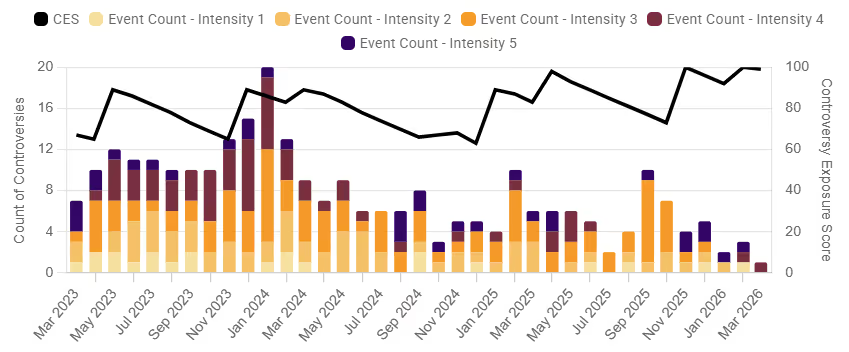
While taking a deeper look at GlaxoSmithKline (GSK), we found that the company has a very high Controversy Exposure Score (CES) of 88/100. This elevated score reflects a sustained pattern of governance and social controversies rather than isolated incidents.
On the governance side, GSK has repeatedly faced major legal and regulatory actions, including a $2.2 billion settlement linked to Zantac, a $235 million patent award upheld by the U.S. Supreme Court, and multiple fines for misleading marketing, anticompetitive behavior, and bribery. Several of these events are flagged as UN Global Compact (UNGC) violations, particularly under principles related to anti-corruption, labor rights, and ethical business conduct, while others remain under UNGC watchlist classification.

Social risks further expose GSK, including recurring product recalls and regulatory suspensions tied to contamination, dosing, and packaging defects, as well as labor disputes, strikes, and large-scale layoffs across Europe and the United States. Together, the CES score and UNGC screening highlight persistent governance weaknesses and social risk drivers that continue to shape GSK’s overall risk profile.

gsk

Key Controversies:

Novartis: Governance and Sustainability Concerns

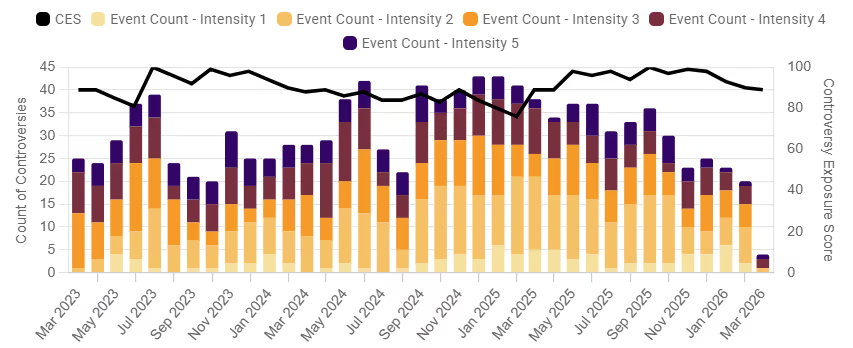
Similar to GSK, Novartis shows very high controversy exposure, with a CES of 84/100, reflecting sustained ESG headwinds rather than isolated events. Governance risks are the primary driver of this elevated score, with Novartis facing repeated fraud and bribery allegations, competition and price-fixing investigations, patent disputes, and data integrity concerns across multiple jurisdictions. These issues have resulted in significant financial consequences, including nearly $1 billion in U.S. settlements related to improper physician incentives, $345 million to resolve foreign corruption cases, a €444 million antitrust fine in Europe, and several high-value patent dispute settlements.

A number of these controversies are flagged under UNGC screening, primarily classified as Watchlist events, particularly in relation to anti-corruption, ethical conduct, and legal compliance. Environmental risks also contribute to Novartis’ exposure, following greenwashing allegations and scrutiny over the credibility of its net-zero commitments. On the social front, large-scale workforce reductions, protests, strikes, and voluntary product recalls linked to safety oversight have further intensified the company’s overall risk profile.

novartis

Key Controversies:

Roche: Facing the Spotlight on Governance and Ethics

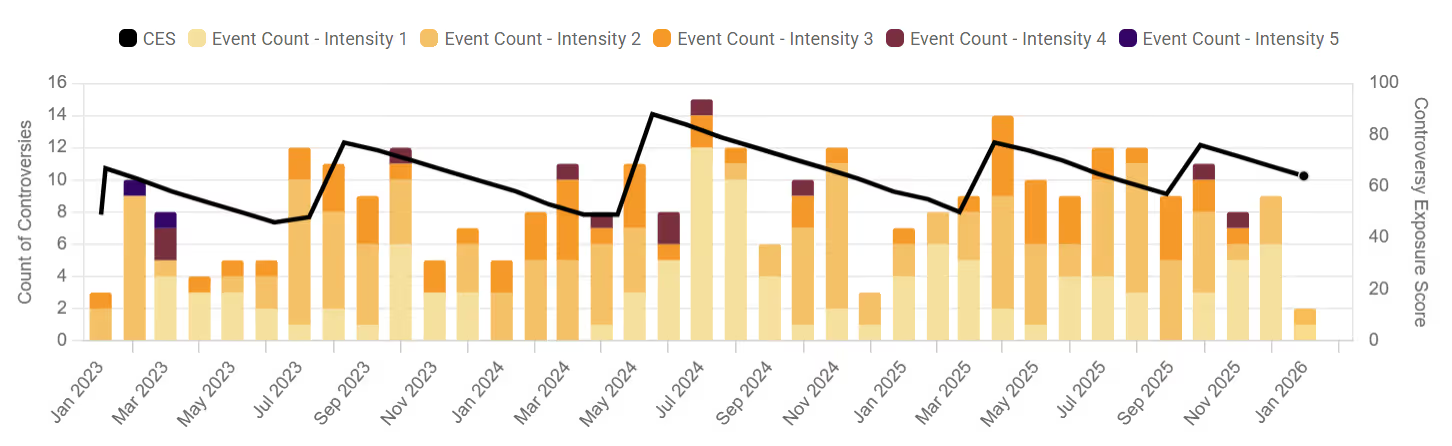
While lower than some of its peers, Roche shows a high level of controversy exposure, with a CES of 64/100. This score still reflects recurring ESG controversies across governance, social, and operational dimensions. Governance-related risks are the main contributors, with Roche involved in multiple lawsuits linked to bribery allegations, antitrust and excessive pricing practices, patent disputes, and marketing misconduct, including a €444 million antitrust fine in Europe.

Several of these events are captured under the UNGC screening, predominantly classified as Watchlist cases, particularly in relation to anti-corruption, competition practices, and governance standards. Environmental risks have also emerged, with the Ethos Foundation publicly challenging Roche’s sustainability reporting and executive remuneration practices, and its subsidiary Genentech was fined $158k for hazardous materials violations. On the social front, Roche has faced drug recalls tied to safety deficiencies, large-scale global layoffs, reported employee exposure to hazardous substances, and legal rulings related to workplace discrimination, all contributing to its overall ESG risk profile.

roche holding

Key Controversies:

Conclusion

Across GlaxoSmithKline, Novartis, and Roche, ESG risk in the pharmaceutical sector is clearly structural. Governance controversies remain the most persistent and financially material, while social risks tied to product safety and workforce practices continue to drive litigation and reputational pressure. Environmental issues, though less frequent, increasingly raise questions around credibility and compliance.

Together, these cases highlight the need for continuous, forward-looking risk monitoring in a sector where regulatory scrutiny, public trust, and long-term value are tightly connected.

Reach out to SESAMm

TextReveal’s web data analysis of over five million public and private companies is essential for keeping tabs on ESG investment risks. To learn more about how you can analyze web data or to request a demo, reach out to one of our representatives.

ESG | AI

A Clearer View of Risk: A New Year's Message from SESAMm

January 21, 2026
5 mins read

As 2026 kicks off, I want to take a moment to reflect on the year we’ve just closed. 2025 was an important year for SESAMm, marked by both significant milestones and quieter, foundational progress. We launched new AI-powered reports, welcomed major clients, expanded our coverage, and saw our technology move deeper into real decision-making workflows.

None of this would have been possible without the trust and engagement of our clients, partners, advisors, and team. Your willingness to challenge us, work with us, and build alongside us continues to shape what SESAMm becomes.

Below, I’ve shared a few moments from 2025 that helped move us forward, along with what we’re looking ahead to in 2026.

Growing Through Strong Partnerships

In practice, SESAMm’s data is used in very different ways. It supports large-scale monitoring across thousands of suppliers and assets, while also enabling in-depth analysis of individual companies and local markets.

In 2025, collaborations with organizations such as Sayari, BNP Paribas, Caisse d’Epargne Rhône Alpes, ENGIE, Clarity AI, and Inrate reinforced something we have believed from the beginning: understanding risk today requires data that is both scalable and usable within real decision-making workflows.

More importantly, these partnerships reflect the confidence placed in the quality of SESAMm’s data and its breadth of use. In one case, a financial institution used supplier monitoring to identify early signals of forced labor risk in a supply chain that had previously passed traditional audits. That insight did not replace existing processes, but it changed the questions being asked and the actions that followed.

Welcoming New Advisors

We were also proud to welcome Guy Gresham and Magnus Billing as advisors this year. Their experience, perspective, and intellectual rigor have already challenged us in the best possible way.

As we continue to build SESAMm for the long term, their guidance helps ensure that our technology remains both ambitious and grounded in how risk is actually understood, assessed, and managed in the real world. In a market that is evolving quickly and sometimes unpredictably, that discipline matters.

From AI Promises to AI in Practice

AI dominated conversations again this year. What changed in 2025 was less the technology itself, and more how our clients engage with it.

Initially, the question was whether AI could reliably identify risks. Today, that question has been answered and the conversation has shifted. Clients are asking which risks are most important, which require action, and how to prioritize limited time and resources.

At SESAMm, this translated into concrete product evolution, all with the same objective: supporting both large-scale monitoring and deeper, decision-level analysis. We launched and expanded AI-powered reports, introduced UN Global Compact violation screenings, and significantly increased the number of companies and infrastructure projects we cover globally.

AI is no longer treated as an experimental layer. Our clients are using it as a core component for identifying and tracking risks over time. The question they now face is not whether AI can surface risk, but how to decide which signals deserve attention.

ESG Is Changing, Whether We Like the Term or Not

AI The ESG landscape itself is going through a transformation. Regulatory pressure is uneven. In some regions, expectations are tightening while in others, frameworks are being diluted or politicized. At the same time, the term “ESG” is itself losing ground; it means too much and therefore explains too little.

That has not changed, however, is the nature of the underlying risks. Human rights, forced labor, biodiversity loss, governance failures, and reputational exposure are becoming increasingly visible and material to investors, companies, and regulators alike. The conversation is shifting from broad labels to specific facts, with greater attention paid to the events and the evidence that inform both scores and decisions. This shift from labels to evidence is where SESAMm’s approach is particularly relevant.

Looking Forward

As we move further into 2026, our focus remains clear. We will continue to invest in signal quality over noise, depth over surface-level insight, and tools that help our clients act, not just observe. We will keep expanding coverage where risk is hardest to see, particularly in private markets, and will continue to develop cutting-edge AI agents to support client workflows.

The question for 2026 is not simply how much risk data organizations have, but how effectively they interpret and prioritize it in practice.

Above all, we remain committed to building technology that supports our customers and partners with clear, reliable insight into risk, grounded in reality as it is.

Thank you again to our clients, partners, advisors, and team for your trust and engagement over the past year. We look forward to continuing this journey together!

Wishing you a wonderful and successful year ahead,

Sylvain Forté
CEO, SESAMm

Reach out to SESAMm

TextReveal’s web data analysis of over five million public and private companies is essential for keeping tabs on ESG investment risks. To learn more about how you can analyze web data or to request a demo, reach out to one of our representatives.

The biotech industry faces significant ESG risks, particularly in governance. Social and operational risks are less common but still material.

Across the sector, companies like Cassava Sciences, BrainStorm Cell Therapeutics, and Anavex Life Sciences frequently face governance controversies, including shareholder and class action litigation, security fraud, SEC investigations, and more. While social risks are generally secondary, they are notable in areas such as workforce reductions, layoffs following acquisitions, and labor disputes, with patient-safety considerations emerging in therapies with adverse effects.

What are the most pressing ESG challenges currently facing the biotech sector? Read on to find out.

Cassava Sciences: Governance and Transparency Concerns

Cassava Sciences has a high Controversy Exposure Score, the result of its involvement in several severe ESG controversies. The company has faced class action and shareholder litigation, resulting in settlements of $31M and $40M over allegedly misleading statements related to its Alzheimer’s drug, Simufilam. Governance concerns are further amplified by allegations of manipulating trial data and scientific misconduct, which have attracted both SEC investigations and reports of criminal probes. Additional legal controversies include malicious prosecution and defamation lawsuits filed in response to alleged “short and distort” campaigns. On the social side, Cassava has faced a 33% reduction in its workforce, reflecting operational restructuring.

Key Controversies:

Anavex Life Sciences: Lawsuits and Regulatory Scrutiny

Anavex Life Sciences faces notable governance risks, primarily stemming from shareholder litigation and concerns regarding the integrity of its clinical trials. Multiple class action lawsuits allege misrepresentation and deceptive practices, particularly in reporting outcomes for Rett syndrome and Alzheimer’s disease trials. Governance concerns are compounded by data inconsistencies, changes in trial evaluation criteria, and regulatory scrutiny, including the EU’s rejection of its Alzheimer’s drug.

Key Controversies:

BrainStorm Cell Therapeutics: Fraud and Credibility Allegations

BrainStorm Cell Therapeutics exhibits a concentrated governance risk profile, with issues spanning several aspects. Class action lawsuits and securities fraud claims allege investor harm from misstatements, while the company faces lawsuits for overstating FDA feedback and misrepresenting the efficacy of its ALS therapy, NurOwn. These allegations are reinforced by FDA panel and reviewer concerns, raising questions about its scientific credibility. BrainStorm is also facing delisting from Nasdaq and a breach of contract lawsuit. On the social front, the company’s ESG exposure stems from plant shutdowns, workforce restructuring, and job cuts, raising labor practice concerns.

Key Controversies:

Conclusion

The biotech industry’s ESG profile is increasingly shaped by governance-related controversies, particularly around transparency, litigation, and regulatory scrutiny. Companies like Cassava Sciences exemplify how unresolved allegations, ranging from trial data manipulation to securities fraud, can significantly shake stakeholder trust and financial stability. While social and operational risks appear less frequently, workforce reductions, safety concerns, and labor disputes highlight broader vulnerabilities tied to the sector’s rapid pace and scientific complexity. As the industry continues to innovate, managing these ESG risks will be crucial not only for compliance but also for long-term credibility and sustainable growth.

Reach out to SESAMm

TextReveal’s web data analysis of over five million public and private companies is essential for keeping tabs on ESG investment risks. To learn more about how you can analyze web data or to request a demo, reach out to one of our representatives.

Human rights concerns took center stage in November, with rising scrutiny on how digital platforms and luxury brands safeguard vulnerable users and workers. Across the market, allegations of child exploitation, extremist activity, and labor abuses exposed significant governance and oversight gaps. The month’s top three most controversial companies were Roblox Corporation, Snap Inc. (Snapchat), and Tod’s, each facing escalating legal and regulatory pressure.

#1: Roblox Corporation: Intensifying Allegations of Child Exploitation

Roblox, the video game developer, experienced a surge of human rights–related controversies, driven by lawsuits and criminal cases involving child exploitation and online extremism. Multiple families in the United States filed suits alleging that predators used the game to groom and coerce minors, in some cases leading to severe psychological harm.

Regulators also increased pressure. The Texas Attorney General sued the company, accusing it of violating safety laws and misleading parents about the risks associated with young users. Additional criminal cases surfaced in the US, Ireland, and Argentina, where adults were convicted of grooming minors through Roblox. The company faced further backlash after its CEO referred to the child predator crisis as an “opportunity,” prompting criticism even as Roblox highlighted new age-verification tools aimed at improving safety.

#2: Snap Inc.: Social Messaging Platforms Under Renewed Scrutiny

Snap Inc., known for its messaging app Snapchat, emerged as the second-most controversial company in November following several serious incidents involving minors. In the United States, a missing 13-year-old girl was found in a Pennsylvania basement after meeting a man on Snapchat, who has since been charged with human trafficking and sexual assault. Another investigation led to the arrest of a New York man after Snapchat flagged suspected child sexual abuse material on his account.

At a broader level, new research from the Canadian Centre for Child Protection revealed widespread online sexual violence among youth, with Snapchat cited as one of the primary platforms involved. The company was also named in a major lawsuit filed by US school districts against Meta, Google, Snapchat, and TikTok, alleging that platforms suppressed internal research on youth harm and failed to implement meaningful protections.

#3: Tod’s: Supply Chain Labor Abuses Trigger Legal Action

In the luxury sector, Tod’s faced heightened scrutiny following new developments in an ongoing investigation into labor exploitation at its supplier factories. Italian prosecutors expanded their probe into three company executives, citing evidence of serious labor violations involving 53 workers employed by subcontractors. Issues raised included long working hours, low wages, inadequate safety standards, and poor living conditions.

Authorities also highlighted potential negligence and omissions by management, arguing that Tod’s failed to act on inspection findings that documented the abuses. Prosecutors have requested a six-month advertising ban and previously sought judicial administration over the company’s supply chain controls.

Conclusion

November’s top controversies underscore increasing pressure on companies to ensure robust human rights protections, both online and across global supply chains. As regulators, law enforcement, and civil society intensify oversight, firms in technology and consumer markets face rising expectations to demonstrate stronger safety systems, transparent governance, and proactive risk management.

Reach out to SESAMm

TextReveal’s web data analysis of over five million public and private companies is essential for keeping tabs on ESG investment risks. To learn more about how you can analyze web data or to request a demo, reach out to one of our representatives.

When Meta's market value declined by $307 billion over four trading days in October 2025, it demonstrated a fundamental shift in how markets process reputation risk. Algorithmic systems detected, interpreted, and priced a narrative misalignment faster than the company's internal coordination process could respond.

This wasn't an isolated event. It reflects how AI has restructured the relationship between reputational events and market consequences.

The Collapse of Sequential Crisis Management

Corporate crisis management has historically relied on sequential stakeholder awareness. A controversy would surface in local media, then spread to analysts, then national coverage, then institutional investors, with retail awareness coming last. This sequence provided time, days, or weeks to investigate, coordinate across functions, and craft targeted responses.
AI has eliminated that sequence.

Today, hedge funds run real-time controversy models that trigger trades within hours. Institutional investors receive automated NLP alerts. ESG vendors update scores continuously by scanning billions of multilingual sources. Proxy advisors flag governance risks in near real-time. Retail investors access sentiment apps that surface issues instantly. NGOs monitor local-language supply chain incidents globally. Regulators deploy automated surveillance that detects patterns before companies file reports.

The result: external stakeholders now see the same signals simultaneously. The response window has compressed from 24–48 hours to sometimes just hours.

How Fast Has “Fast” Become?

The compression is measurable. Compare crisis timelines before and after AI became standard:

Pre-AI Era (2010-2020)

BP Deepwater Horizon (2010): Destroyed $60B in market value in one month, ultimately reaching $100–105B over two months.

Wells Fargo fake accounts (2016): Evolved over three weeks, creating multiple response windows.

Boeing 737 Max (2019): Erased $27B in two days, $40B in two weeks, and $62B over five months as investigations unfolded sequentially.

AI Era (2023-2025)

Meta (Oct 2025): Lost $307B in four days once algorithms flagged narrative misalignment.

Bud Light (2023–2025): A single controversy generated $27B in value destruction within two months and sustained 40% sales declines.

Tesla:  Recalls and investigations repeatedly triggered rapid volatility across compressed time frames.

The pattern is consistent: crisis timelines have collapsed from months to weeks to days.
Regulatory cycles have accelerated as well. The SEC and other agencies now deploy automated surveillance tools, and in several cases, enforcement actions have been disclosed before companies completed internal investigations.

Why Companies Discover Crises Late

Most companies learn about reputational issues after external stakeholders have already detected and acted on them.

Four Categories of Monitoring Tools

  1. Basic keyword tools: Fast, but lack sentiment, context, and depth.
  2. Media monitoring platforms: Broad coverage, high volume, and low material clarity.
  3. AI extraction engines: Add interpretation, but lack access to investor-grade sources.
  4. AI-driven controversy analytics (SESAMm, RepRisk, TruValue Labs, Verisk Maplecroft): Apply large-scale NLP to billions of multilingual data points, including regulatory filings, NGO reports, and local-language media. Platforms operating at this scale - SESAMm alone monitors over 5 million companies across 4 million+ sources, including private firms in low-disclosure markets -  provide visibility most corporates do not have.

This is where the detection gap originates: most corporates rely on categories 1–2; markets rely on category 4.

The Coordination Gap

Reputation responsibilities typically sit across Communications, IR, ESG, Risk, Legal, Public Affairs, regional leads, and business units. Each has separate systems and approval paths.

When crises unfold over hours, this structure becomes a bottleneck.

Sector-Specific Amplification Patterns

AI accelerates information flow differently by industry:

Pharmaceuticals: Clinical data travels through medical networks → hedge funds within 4–6 hours.

Financial Services: Disclosure anomalies → lawyers → regulators in days, not weeks.

Consumer/Energy (complex supply chains): Supplier issue → local media → NGOs → retail boycotts in 48–72 hours.

Generic plans fail because velocity is industry-specific.

What Leading Organizations Are Building

Companies adapting to machine-speed markets are focused on closing the detection gap and compressing coordination cycles.

A Pre-release AI Content Analysis

Before major disclosures, leading organizations now assess:

  • What controversy categories may be triggered
  • Expected sentiment scores
  • Governance themes algorithms will extract
  • Phrases correlated with a negative reaction in their sector

This is not message sanitization, it's anticipating how machines will interpret the content.

Compressed Coordination Frameworks

Organizations have implemented pre-authorized workflows enabling response in 2–4 hours:

  • Pre-cleared language templates
  • Simplified approvals
  • Clear escalation thresholds
  • Regular simulation exercises

Stakeholder ecosystem mapping

Understanding who detects what and how issues escalate allows for proactive engagement with NGOs, analysts, sentiment communities, short sellers, and others.

Unified monitoring infrastructure

Shared dashboards give all functions real-time visibility into:

  • Sentiment shifts
  • Controversy score changes
  • ESG rating movements
  • Supply-chain signals
  • Retail sentiment trends

Some organizations have begun deploying AI agents to automate entire steps: summarizing incidents, assessing severity, and routing them to the correct teams, helping move from detection to coordinated action with far less manual effort.

Financial Quantification

Boards increasingly expect:

  • Expected volatility ranges
  • Funding cost implications
  • Correlation with institutional flows
  • Proxy voting impacts

Reputation must now be expressed in capital markets language.

The Governance Shift

Reputation is migrating into integrated risk committees with representation from Finance, Risk, Legal, Corporate Affairs, and IR. Some boards now use real-time dashboards with automated escalation.

Controversy detection is being incorporated into materiality assessments, proxy preparation, and disclosure committee processes.

Practical Implications Across Functions

  • IR explains volatility driven by algorithmic pricing of signals not yet internally detected
  • Communications must prioritize speed alongside accuracy
  • Risk quantifies reputation financially
  • ESG manages real-time score shifts
  • Legal faces enforcement that may precede internal review
  • Public Affairs addresses issues that now cross borders instantly
  • C-Suite must increase coordination speed

Conclusion

AI has compressed crisis timelines from months to days and eliminated sequential stakeholder awareness. Markets now detect, interpret, and act on reputational signals faster than traditional internal processes.

Organizations that close the detection gap and compress coordination to hours rather than days gain measurable advantages in volatility management and stakeholder confidence.
The assumption that companies can control when stakeholders become aware of reputational issues is no longer valid. Crisis response must now match the speed at which markets process risk.

Reach out to SESAMm

TextReveal’s web data analysis of over five million public and private companies is essential for keeping tabs on ESG investment risks. To learn more about how you can analyze web data or to request a demo, reach out to one of our representatives.

ESG

ESG Assessment: LVMH

December 10, 2025
5 mins read

SESAMm’s AI-generated ESG Assessment Reports deliver fast, sharp insights into the ESG performance, risks, and controversies of leading global companies in under 30 minutes. Designed for investors, risk teams, and sustainability leaders, they surface the issues that matter most for due diligence and portfolio oversight. In this edition, we dive into LVMH, one of the world’s largest luxury groups, to see how its sustainability ambitions stack up against the challenges it faces. Explore the summary below or fill out the form to receive your own free AI-generated report.

ESG AI Screening Report Summary: LVMH

LVMH Louis Vuitton Moët Hennessy SE (LVMH) is a leading French multinational conglomerate in the luxury goods sector, with a diverse portfolio of 75 brands across fashion, wines, spirits, cosmetics, and more. Despite its strong market position, LVMH faces significant ESG challenges. A major red flag is the €8 million fine by the French Autorité des Marchés Financiers for failing to disclose its acquisition of a stake in Hermès, highlighting governance and transparency issues. The company has been criticized for environmental impacts, including deforestation linked to its leather supply chain and allegations of greenwashing. Social risks are also prominent, with labor exploitation cases in its supply chain and allegations of workplace harassment.

On the positive side, LVMH claims robust environmental targets, such as a 55.1% reduction in Scope 1 and 2 emissions by 2024, and significant investments in renewable energy. The company is a signatory of the UN Global Compact, indicating a commitment to international sustainability standards.

However, the luxury goods industry inherently faces severe ESG risks due to high scrutiny and frequent controversies, such as cultural appropriation and labor issues. LVMH's ESG reporting is comprehensive, with detailed disclosures on environmental and social initiatives, but the presence of significant controversies suggests a need for improved governance and transparency.

The ESG landscape for U.S. private equity firms is increasingly defined by systemic governance pressure and rising social and environmental scrutiny. Governance issues at firms such as Blackstone, KKR, Thoma Bravo, TPG, and Francisco Partners primarily focus on deal processes, disclosure practices, and investor protection. These concerns encompass settlements related to pension mismanagement, actions taken by the Department of Justice regarding pre-merger filings, as well as lawsuits and shareholder investigations examining the fairness of take-private transactions and stock buybacks. On the social side, exposure is driven largely by portfolio companies and political positioning. Housing and tenant-rights disputes sit alongside allegations of labor abuses, child labor, and unsafe conditions. Environmental concerns are increasingly prominent, with major companies facing criticism for their exposure to fossil fuels, their impact on climate change, and associated lobbying efforts.

What are the most pressing ESG challenges currently facing the U.S. private equity firms? Read on to find out.

Blackstone: Governance Pressure, Social Backlash, and Climate Criticism

Blackstone is facing a wide range of ESG controversies. Governance challenges include a $227.5 million settlement related to Kentucky pension mismanagement, a $590 million lawsuit involving SPAC Recovery Co. that alleges a fraudulent scheme, and SEC fines tied to off-channel communications failures. On the social front, the firm has drawn criticism for political spending that heavily favors right-leaning candidates, child-labor incidents, and recurring safety violations at portfolio companies. Housing-related concerns also persist, with tenant protests over rent and eviction practices and university movements calling for divestment from Blackstone-linked real estate funds. Environmentally, Blackstone continues to be targeted by climate activists for its fossil fuel exposure and its perceived contribution to escalating climate risks.

Key Controversies:

Reach out to SESAMm

TextReveal’s web data analysis of over five million public and private companies is essential for keeping tabs on ESG investment risks. To learn more about how you can analyze web data or to request a demo, reach out to one of our representatives.

Stay ahead with the latest in ESG and AI intelligence

Join our mailing list to receive new reports, event invites, and updates from SESAMm directly to your inbox.